
WoodBird(s) | AI
La Certosa Island, Venice (IT) | Idea | YACademy - Master's in Wood Architecture | 2024
PAVILIONCIRCULARITYEPHEMERAL
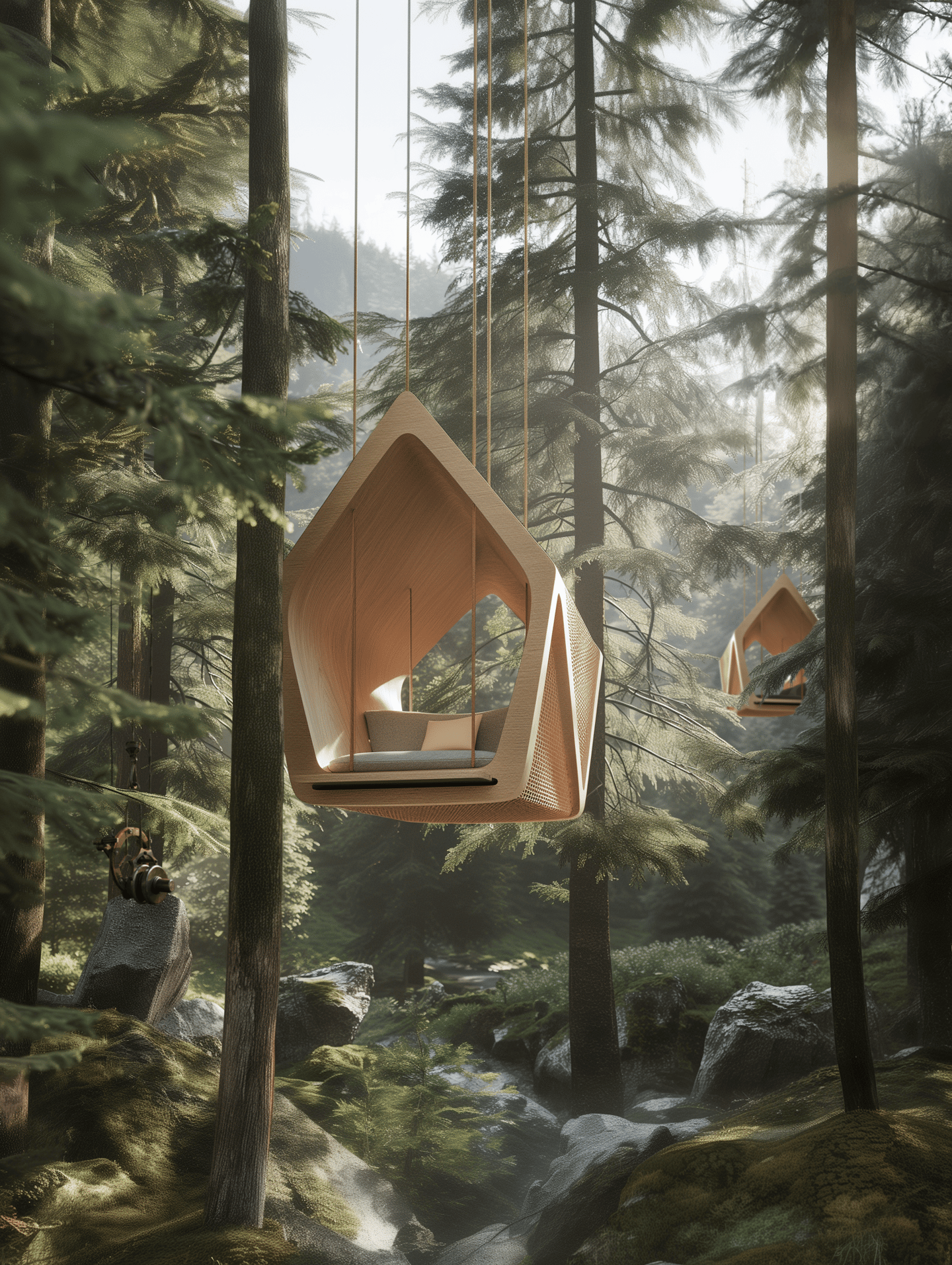
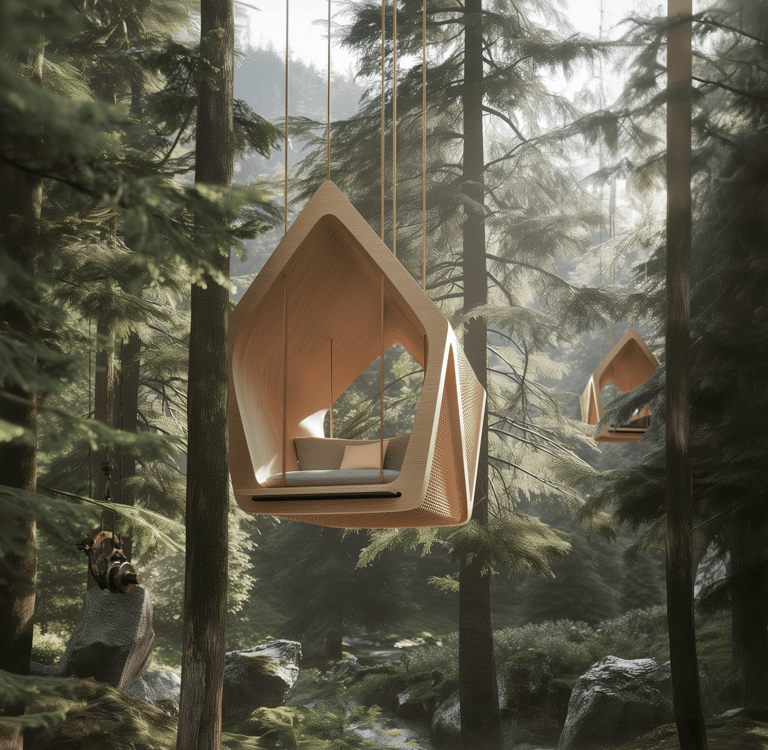
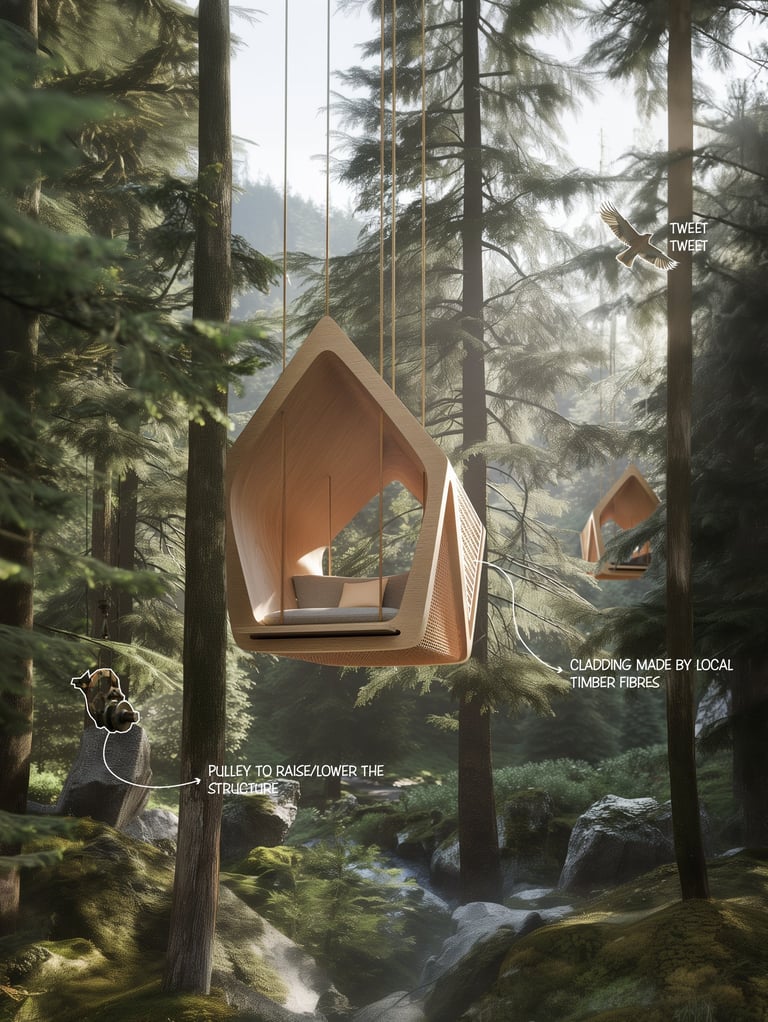
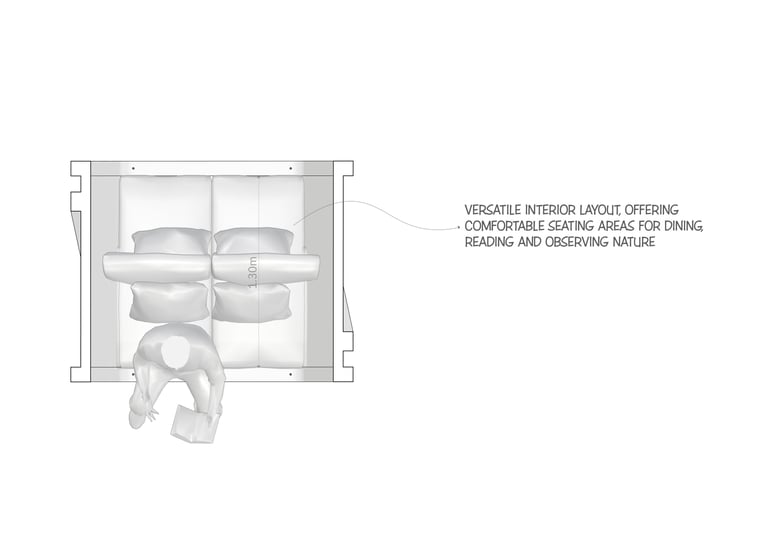
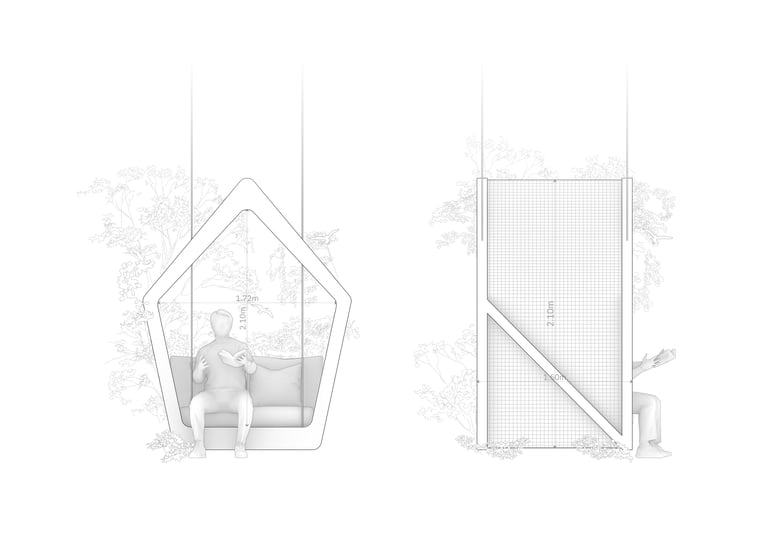
WOODBIRD(s) transcends traditional shelters by creating an interconnected ecosystem of cabins in harmony with the environment.
This innovative design, inspired by vernacular huts, features large openings for total immersion in nature and a mobile anchoring system for dynamic exploration of local flora and fauna.
WOODBIRD(s)
Extensive Network of Suspended Micro-Shelters
WoodBird(s) aims to reinterpret Venetian vernacular architecture through a contemporary language, preserving its intimacy with nature while redefining its spatial and formal expression.
Through Midjourney (May 2024), the process shifts from drawing to prompting. Text replaces sketching as the primary tool of exploration. Iteration becomes rapid, almost conversational, testing variations of proportion, openings, material expression, and spatial atmosphere. Each prompt slightly bends the original archetype, stretching it toward a more contemporary language.
What emerges is not a single image, but a trajectory. A gradual mutation from the known to the unexpected. Among these iterations, a form begins to stabilize. One that balances familiarity and abstraction, rooted yet forward-looking.
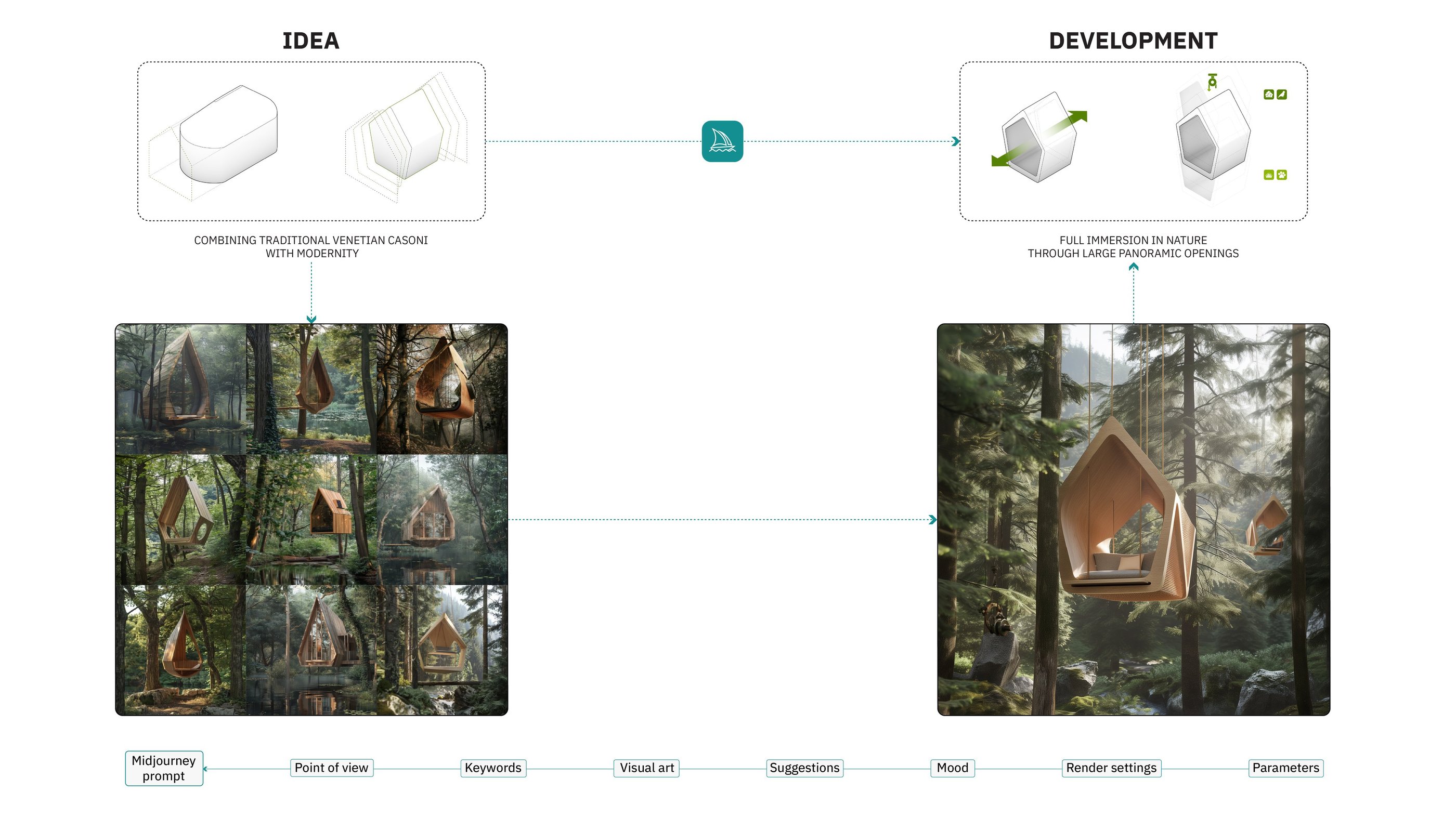
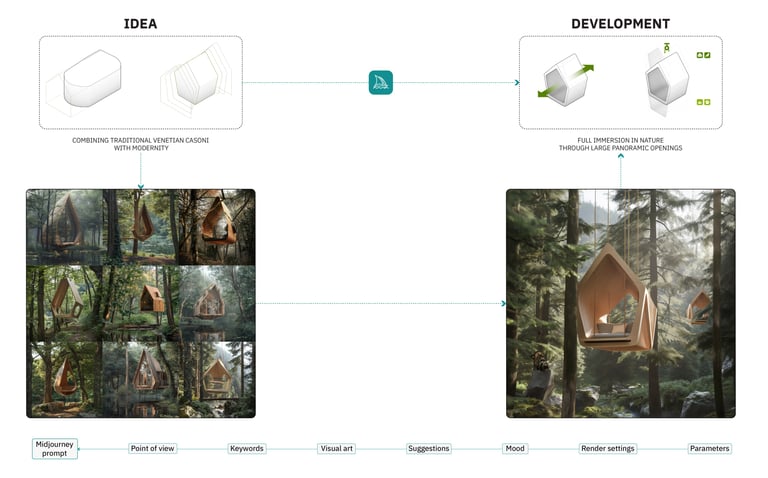
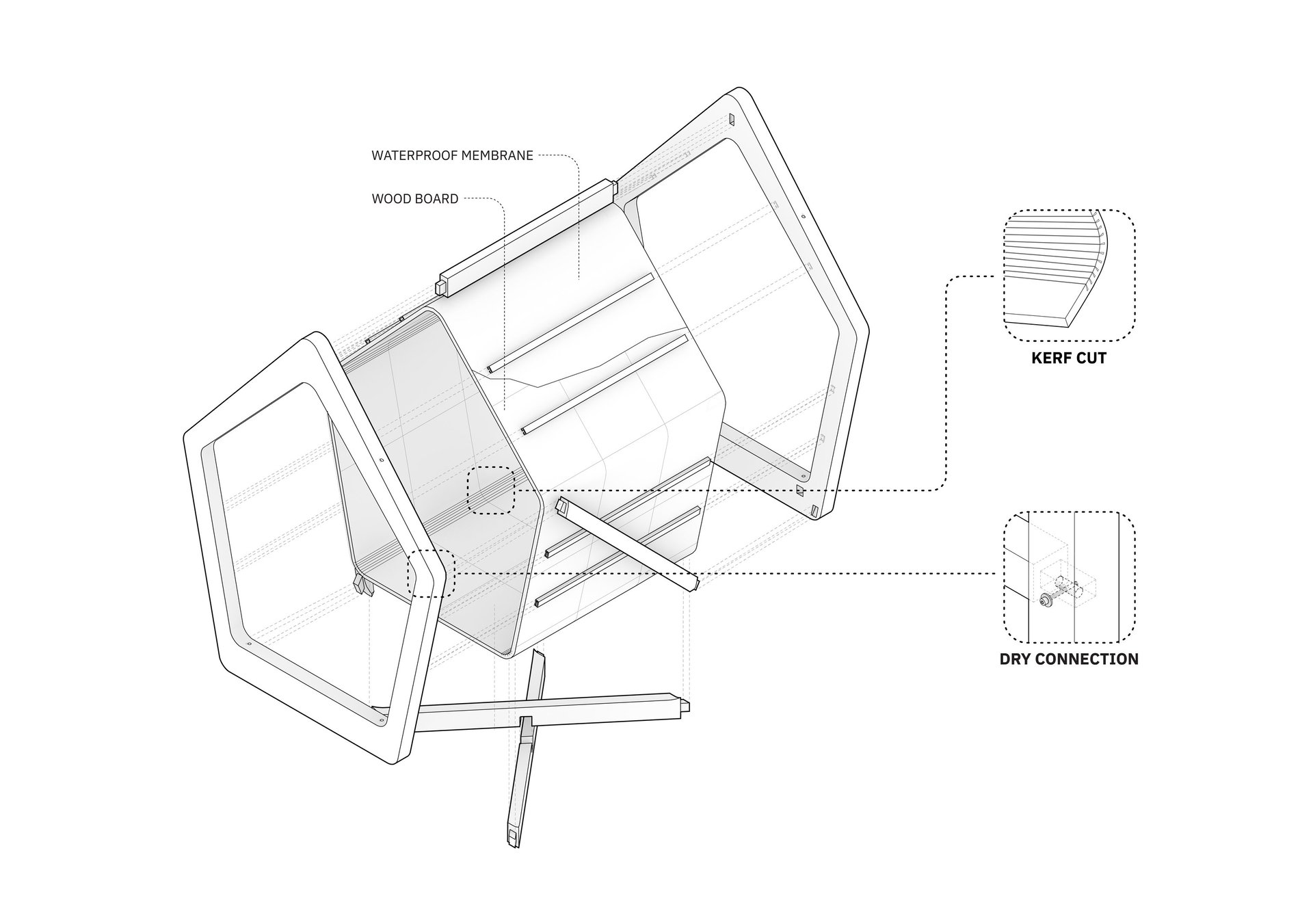
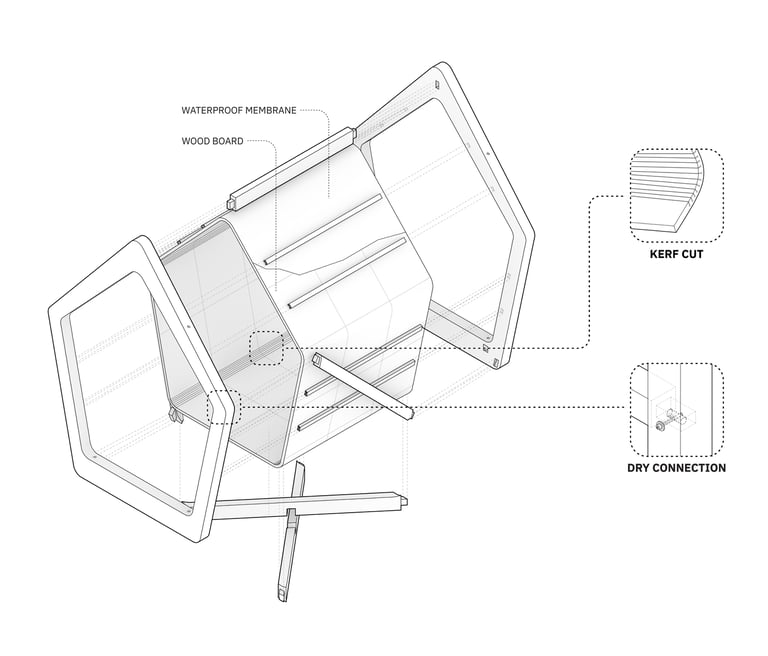

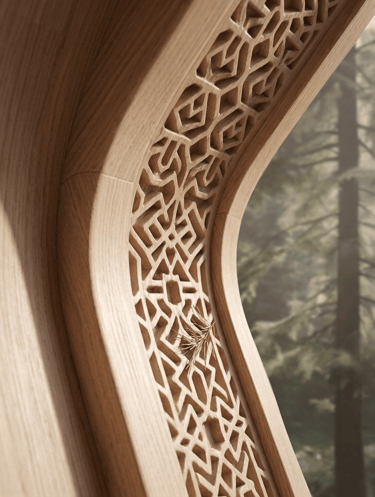

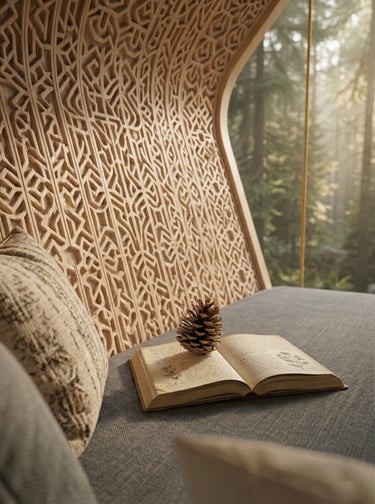
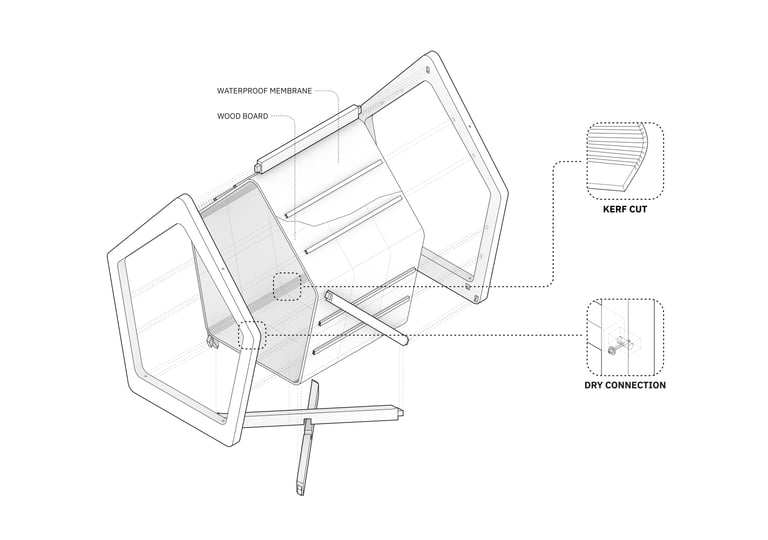
This moment marks a transition. The project moves from generative intuition to architectural control. The selected proposal becomes the basis for development and engineering, where the fluid, AI-generated vision is translated into a buildable system.
With the form defined, the process shifts from generation to immersion.
Using Nano Banana 2 (March 2026), the project is re-entered and explored from within. Instead of producing new concepts, the tool is used to navigate the architecture, moving the camera through spaces to reveal alternative perspectives and atmospheres.
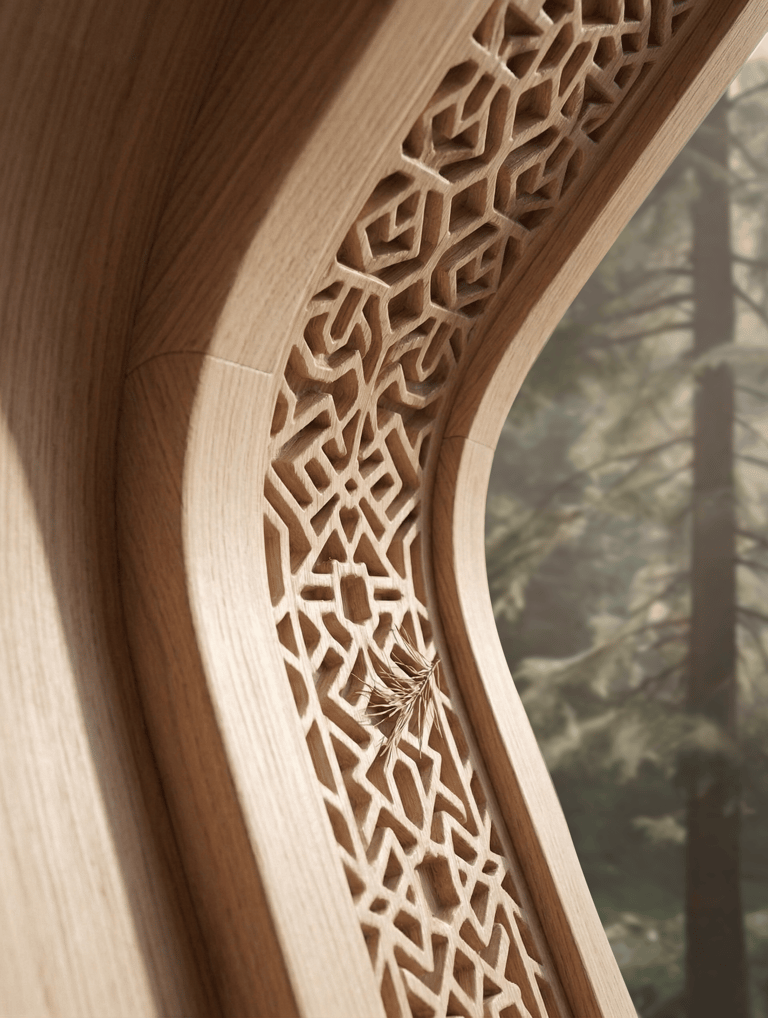
This allows for a more precise reading of the project. Openings, material transitions, and spatial sequences are tested through subtle variations, offering a deeper understanding of how the architecture is experienced.
Rather than redefining the design, this phase refines it, using AI as a lens to observe, adjust, and validate key spatial qualities.

Barcelona, Spain
giuseppemarrone31@gmail.com