

RECONWOOD
ReconWood is a circular timber construction system that aims to transform buildings into reusable material assemblies. Based on discrete, reconfigurable elements, it enables structures to be assembled, disassembled, and adapted over time.
By combining computational design, robotic fabrication, and material data tracking, ReconWood redefines architecture as an evolving system rather than a fixed object.
CREDITS: SDU CREATE ↗ research group - Led by Assoc. Prof. Dr. Roberto Naboni -University of Southern Denmark
Concept, Scientific and Design Development: Anja Kunic, Roberto Naboni, Giuseppe Marrone, Davide Angeletti, Ardeshir Talaei
Fabrication and Construction: Anja Kunic, Giuseppe Marrone, Davide Angeletti, Pedro Vindrola, Daniele Florenzano
Engineering support: Hamed Hajikarimiam, Søren Hansen
Student collaborators: Angelina Garipova, Jesper Hansen, Mads Nielsen, CREATE SS23 Students
In collaboration with: Industry 4.0 Lab - University of Southern Denmark, Aljaz Kramberger, Christian Schlette, Henrik Gordon
Material partner: Stora Enso
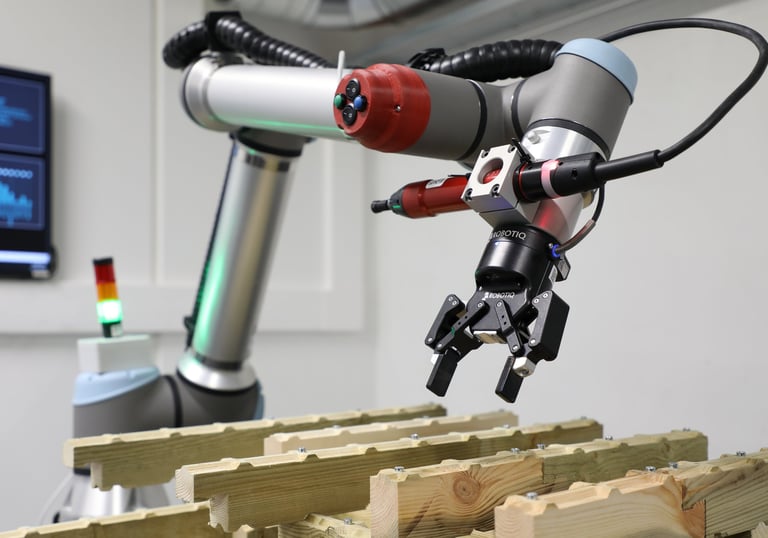
FRAMEWORK

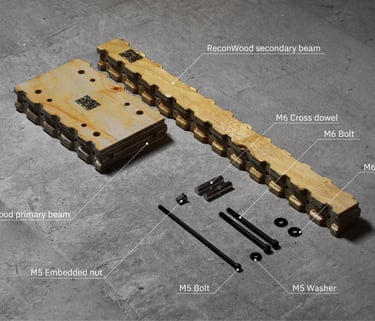
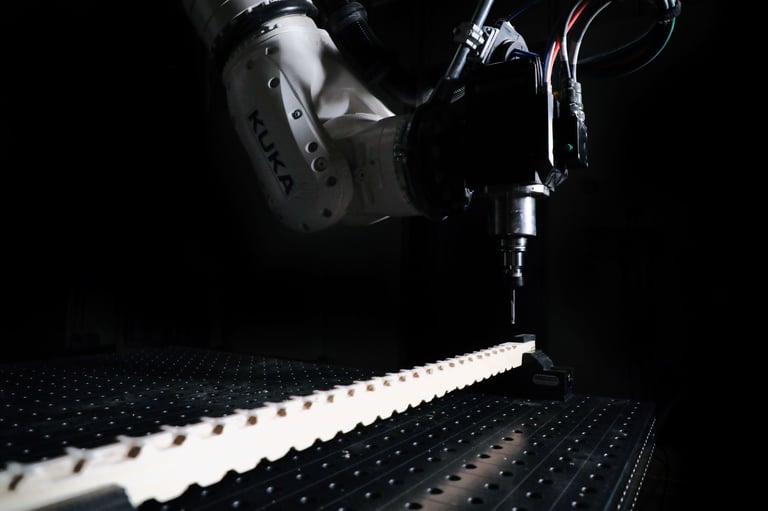
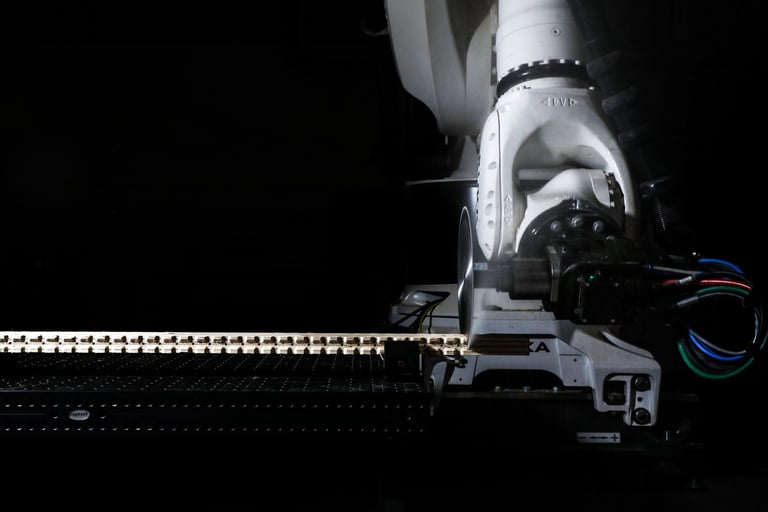
Robotic Fabrication
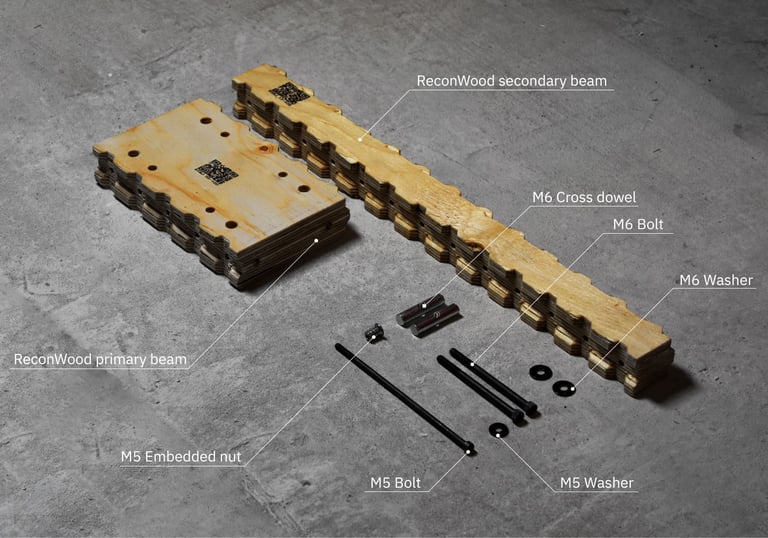
ReconWood Construction Kit
Robotic Assembly & Disassembly
ReconWood emerges within the research environment of SDU CREATE, the Center for Computational Research in Emergent Architectural Technology and Engineering at the University of Southern Denmark, dedicated to exploring how materials can be rethought as a high-performance, data-driven building system.
RECONWOOD SLAB
VOXEL-BASED DESIGN WITH ASTRESS-DRIVEN TIMBER FRAME
Joint Master's Thesis
Students: Giuseppe Marrone, Davide Angeletti | Supervisors: Roberto Naboni, Anja Kunic, Fabio Bianconi, Marco Filippucci
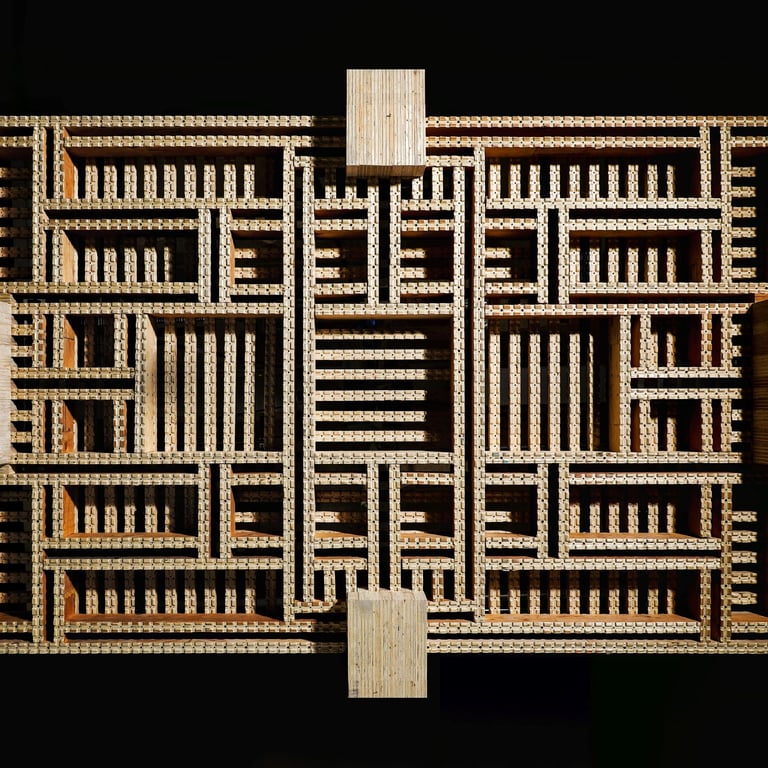
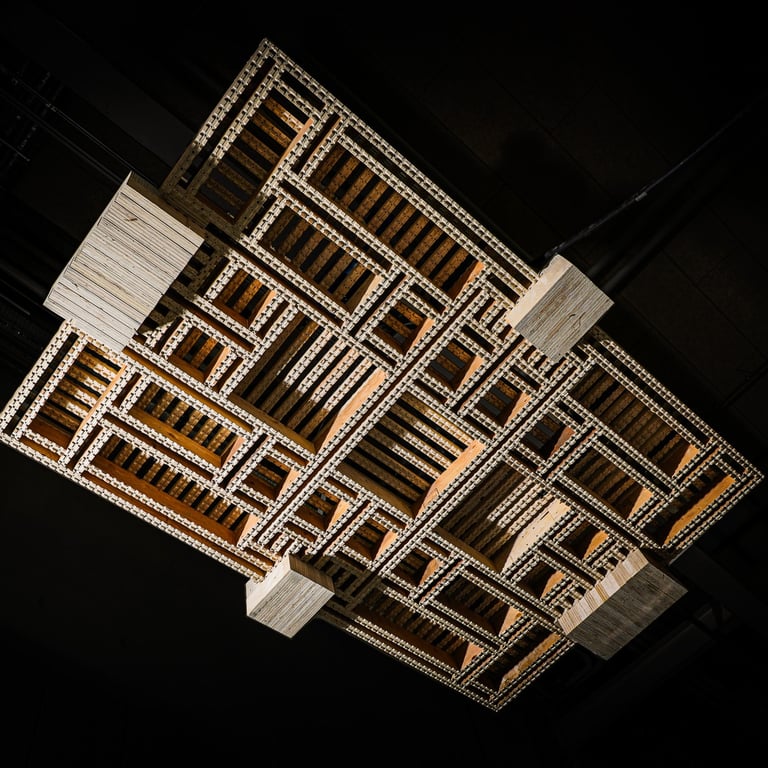
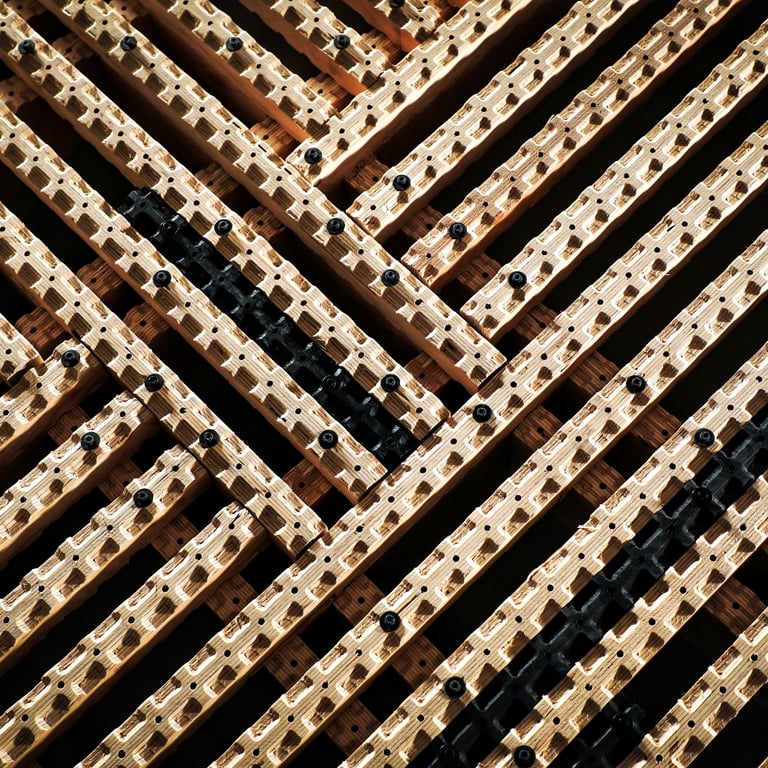
The ReconWood Slab redefines timber construction through a reconfigurable, stress-based, multi-resolution framing system. Leveraging principles for circular construction, it utilizes discrete, reversible timber elements with automation-driven joinery, enabling slab structures to be adaptable to changing conditions and to different lifecycles.
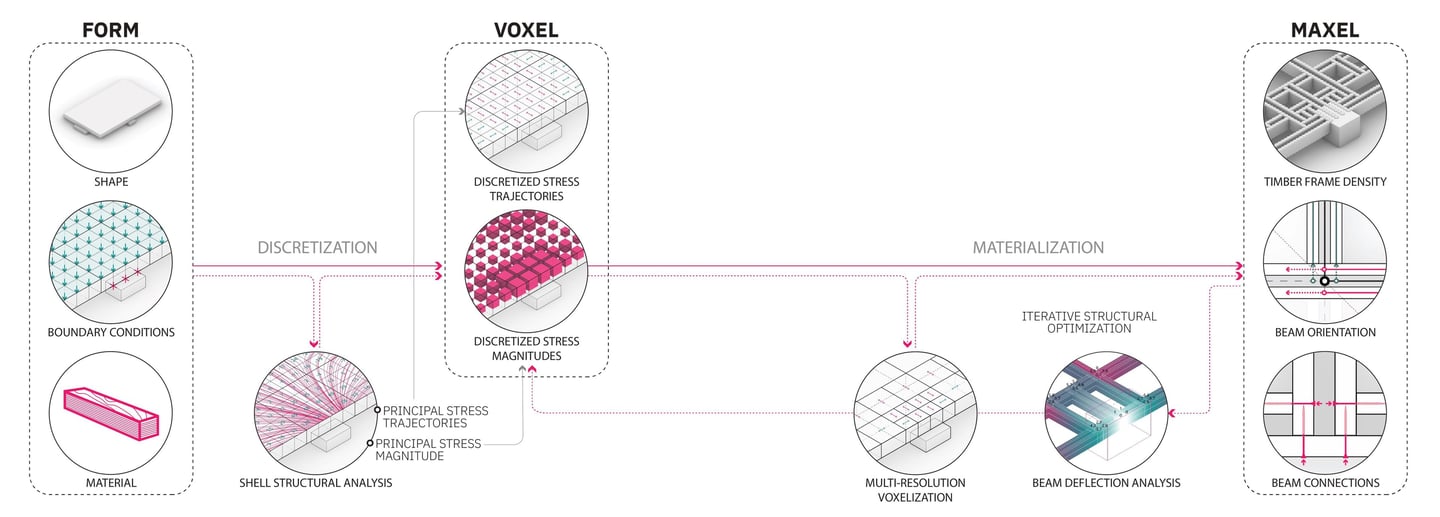
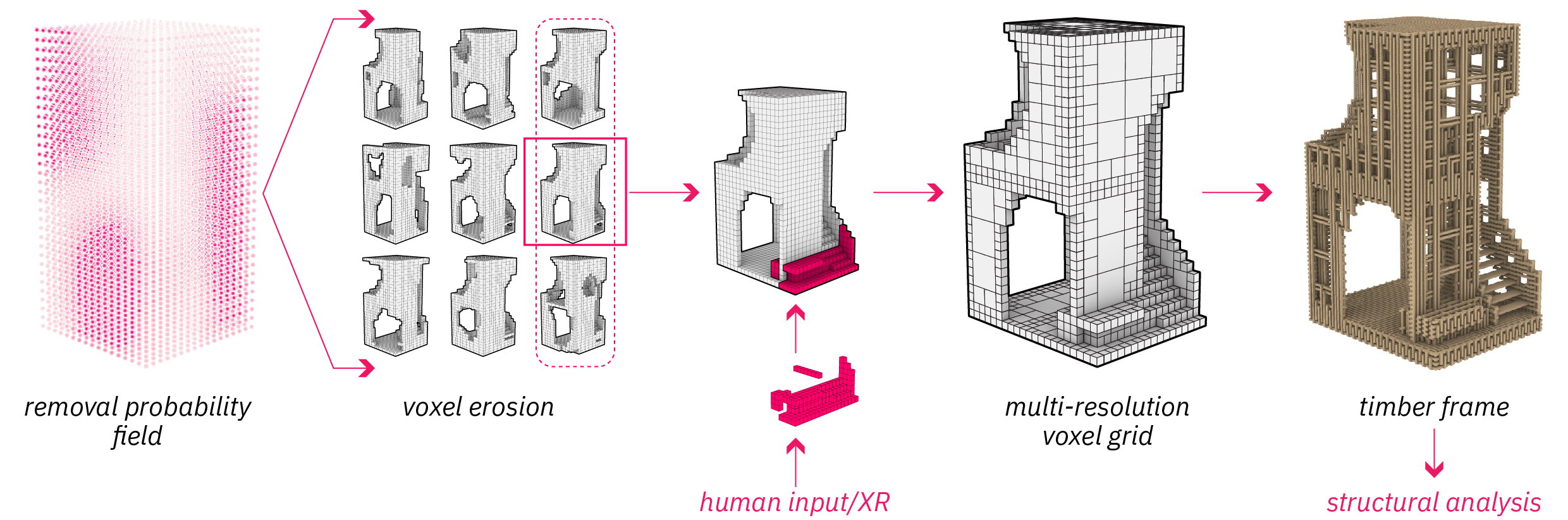
This innovative approach employs a voxel-based computational workflow to generate quickly structurally efficient configurations. This method facilitates diverse design options while reducing computation time.
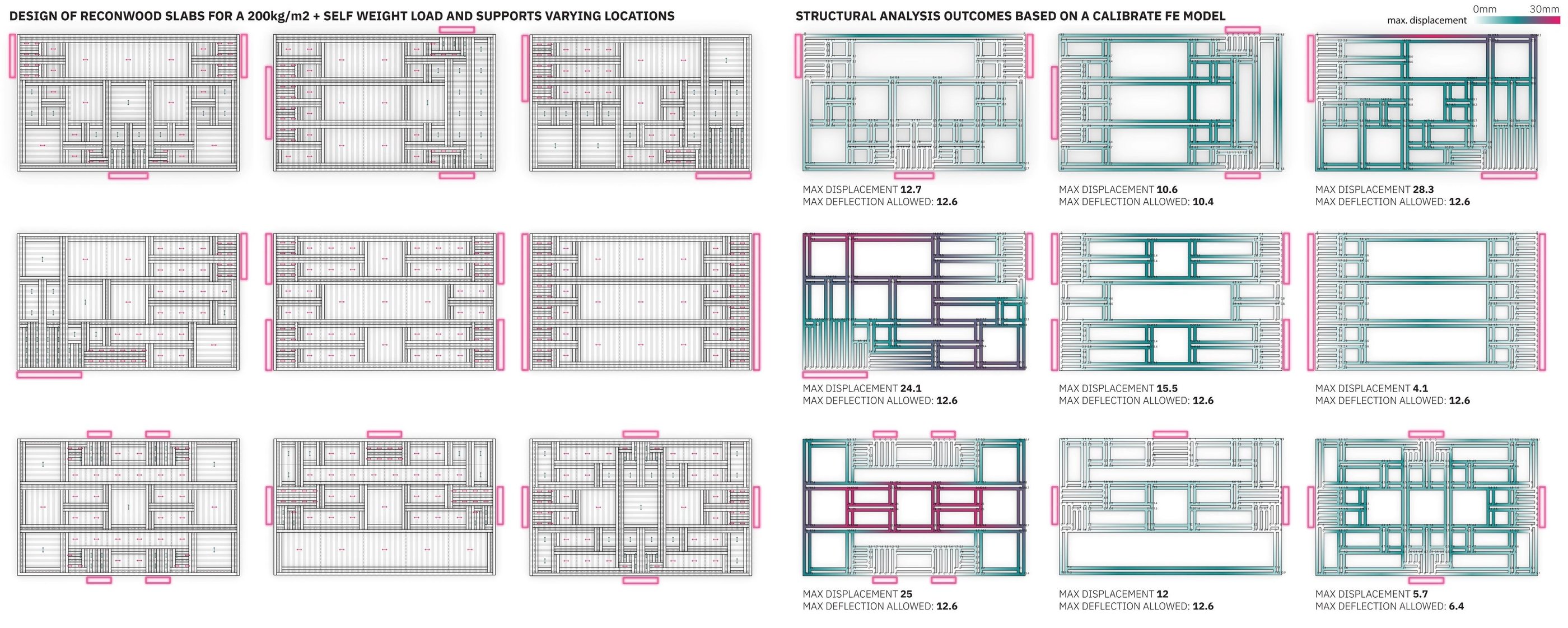
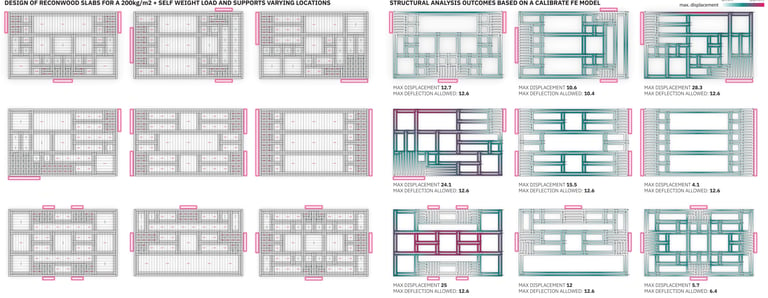
A multi-resolution process, combined with an evolutionary solver, enables the iterative exploration of the multiple design options, optimizing material distribution until an optimal balance between timber usage and structural stress is achieved.
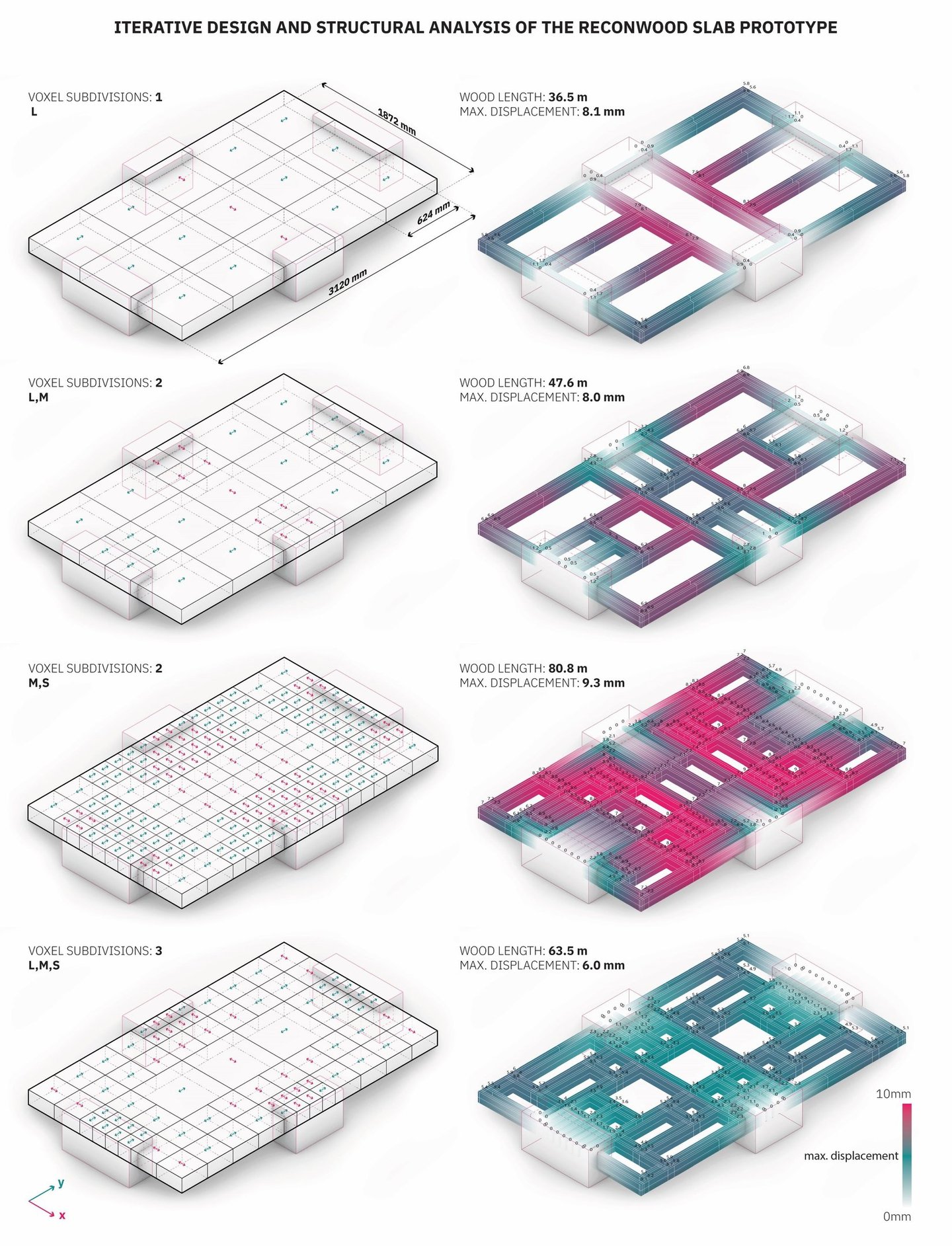
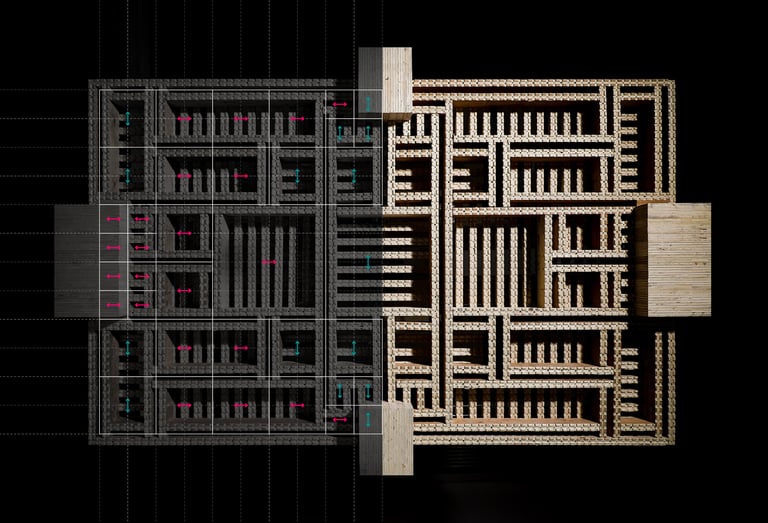
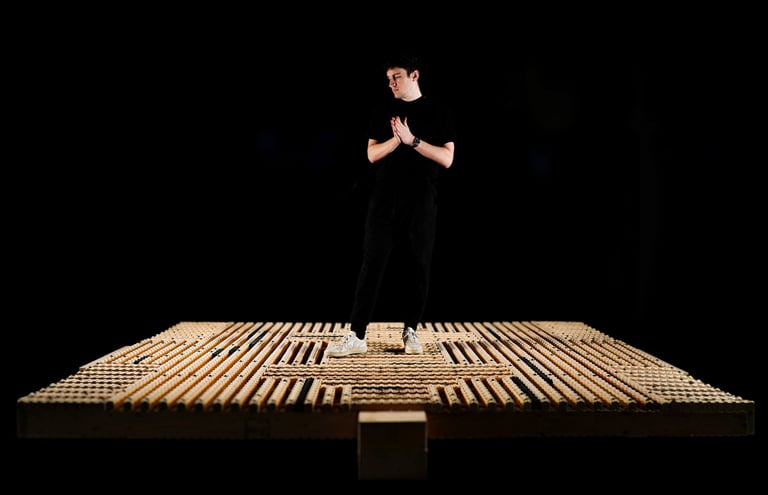
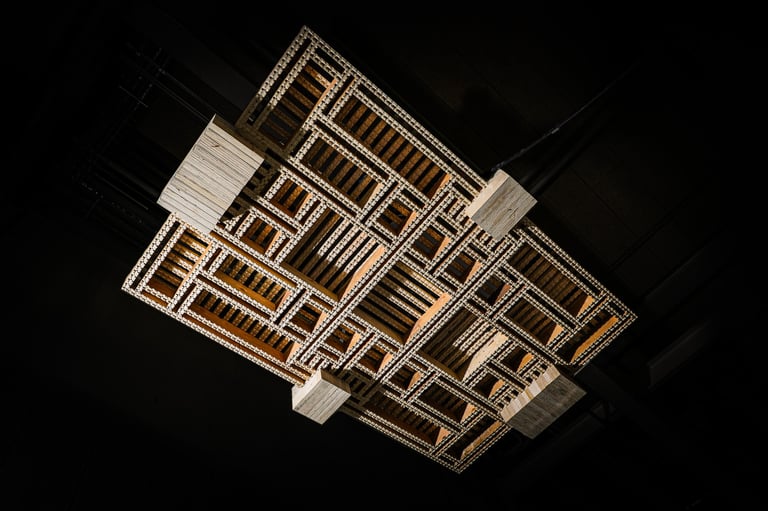
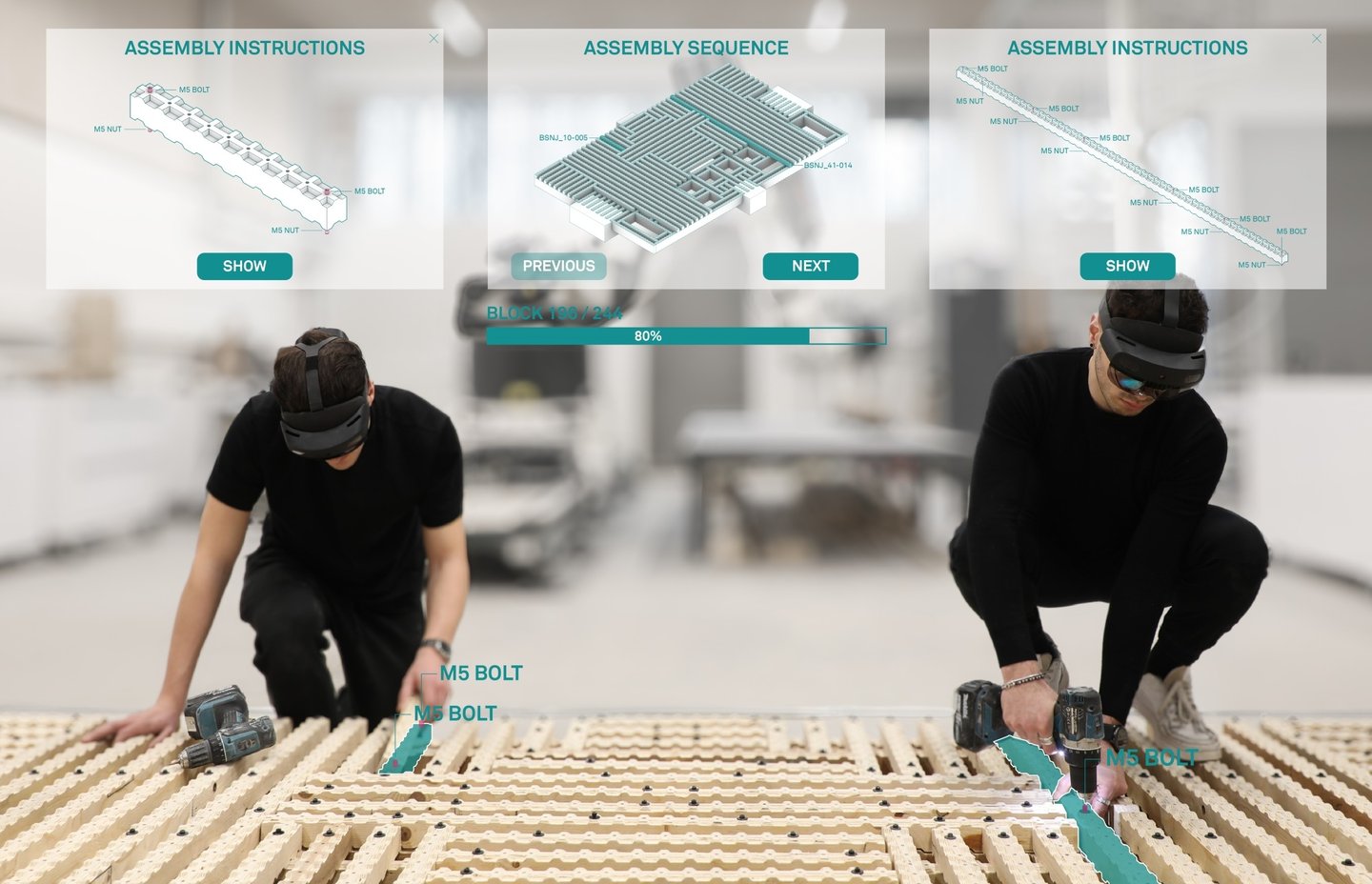
The workflow maintains a seamless digital-to-physical transition, preserving data from design to fabrication, assembly, disassembly, and reassembly via QR codes on each element.
Robotic fabrication, coupled with Mixed Reality and a tailored User Interface, enables the assembly of ReconWood beams, supporting agile and adaptable architecture.


RECONWOOD PAVILION
A DATA-DRIVEN APPROACH TO CIRCULAR ARCHITECTURE
Credits: SDU CREATE
Design Team: Anja Kunic, Giuseppe Marrone, Davide Angeletti, Roberto Naboni
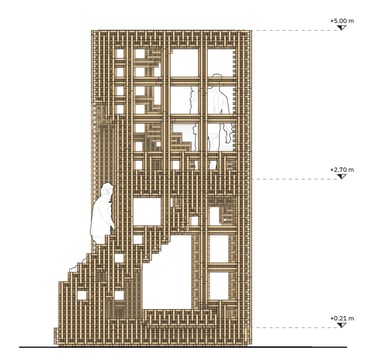
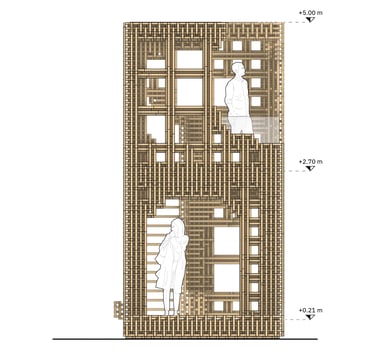
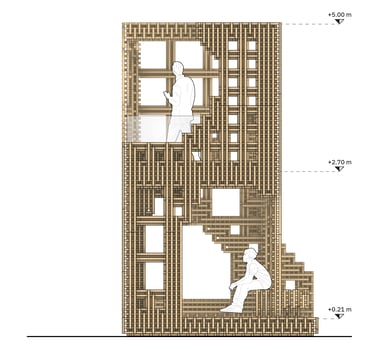
The ReconWood Pavilion is a manifesto for a post-extractive architecture, designed as a spatial prototype for deceleration, material intelligence, and systemic reuse through reconfiguration. Rather than occupying ground through permanence, it intervenes temporarily, designed to be disassembled, relocated, and repurposed in alignment with a circular ethos.
The project harnesses computational design, structural engineering, robotic fabrication, and mixed reality tools to orchestrate a construction system that is both adaptable and precise. Rather than accelerating consumption, these technologies are mobilised to reduce waste, extend material life, and rethink construction as a carbon-storing technology.
Computation enables granular control over material placement and structural performance; robotics executes fabrication with accuracy and minimal error; mixed reality guides on-site assembly with real-time data overlays. Each contributes to a scenario where technological progress supports resource reduction, rather than undermining it.
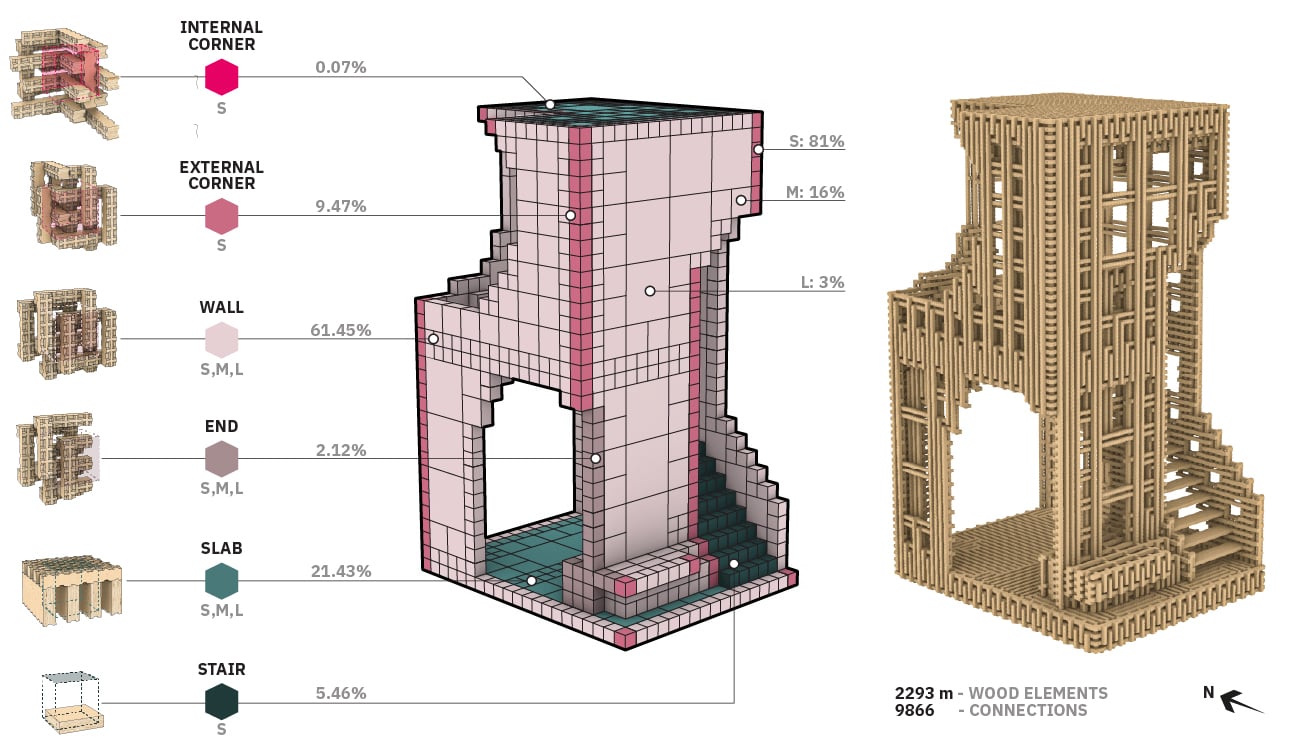
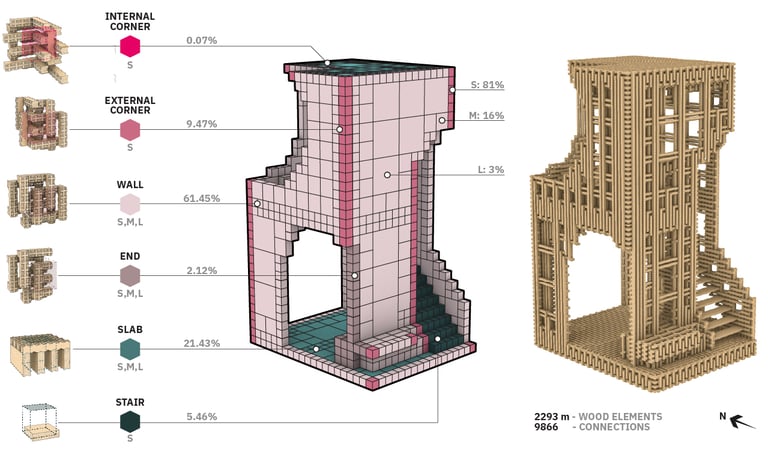
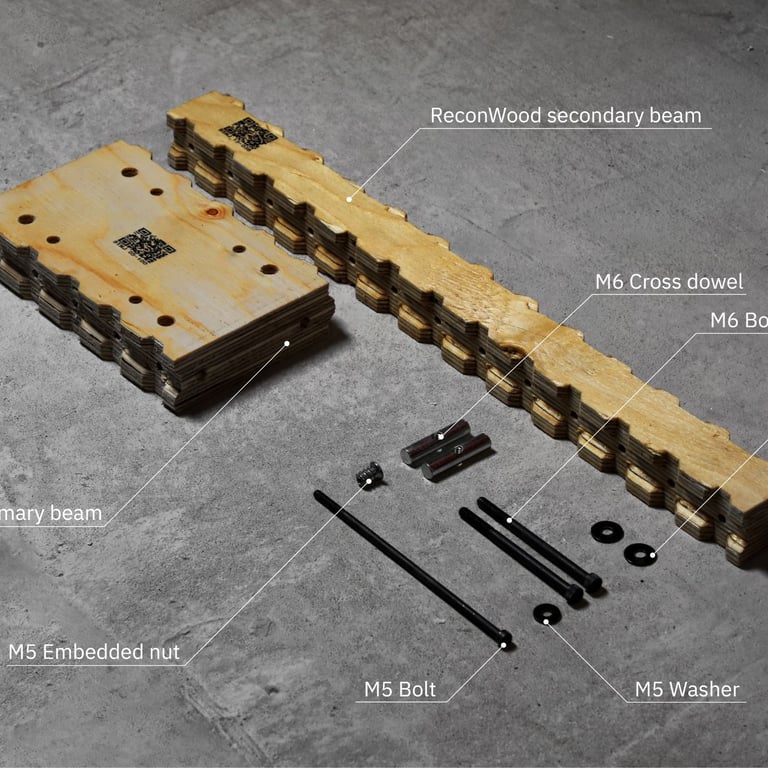
The ReconWood Pavilion is composed of a modular construction kit of parts in wood and reversible joint system, conceived for repeated robotic assembly and disassembly. The joints are based on a shear-key mechanism that ensures mechanical interlock without permanent fixings, fostering circularity and future reuse.
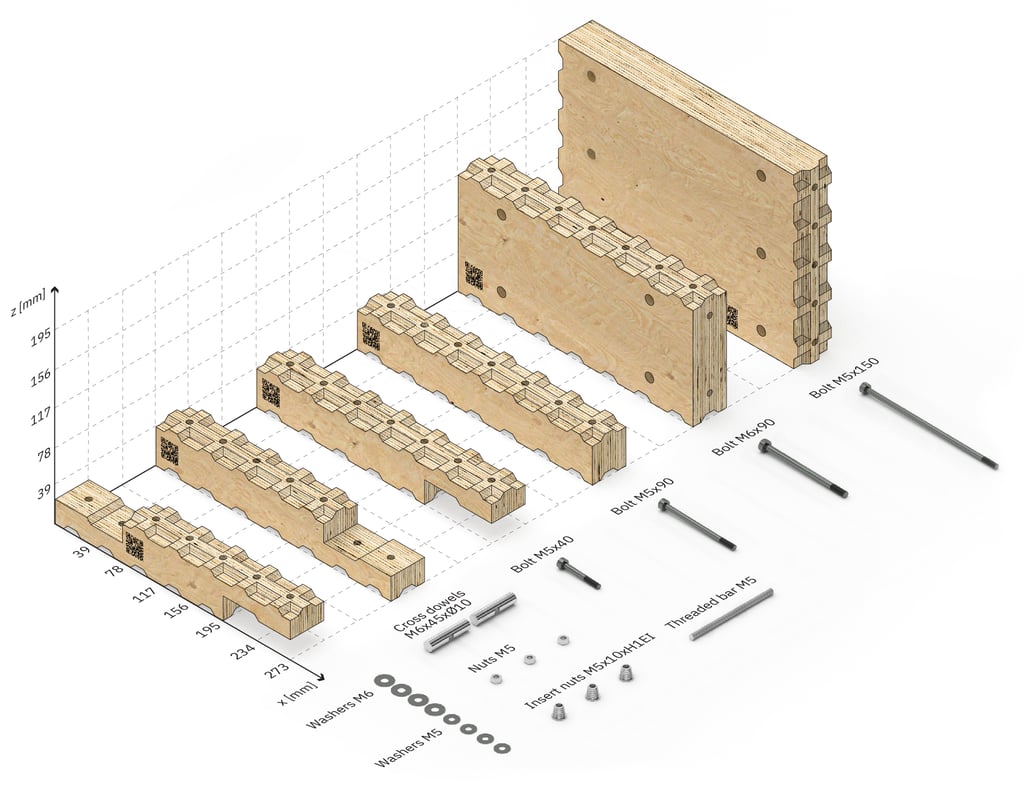
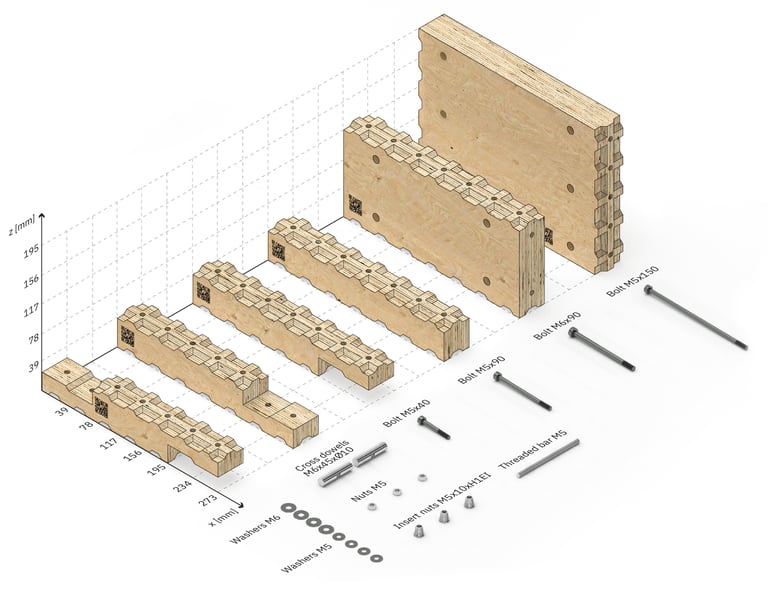
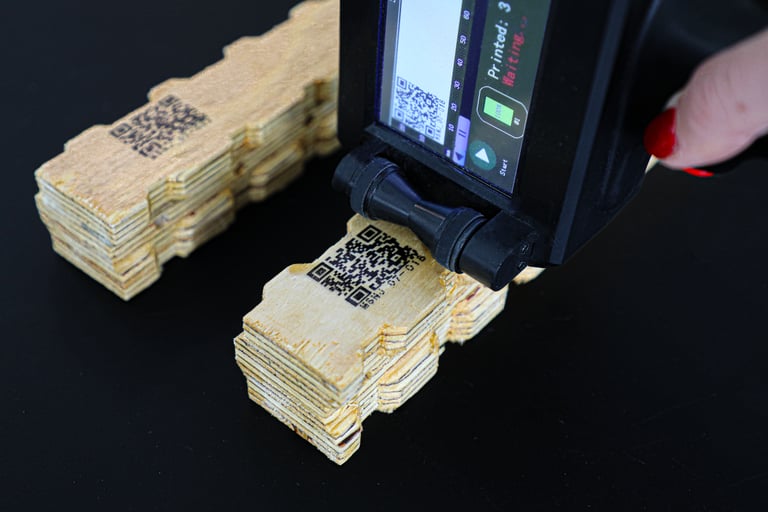

To enable data circulation along with materials, the system envisions digital identification of the construction kit and a cyber-physical infrastructure for tracking and recording the full lifecycle of each element, from origin to deployment. This infrastructure enables traceability and accountability, anticipating not only future reuse, but also the cultural shift towards material stewardship.
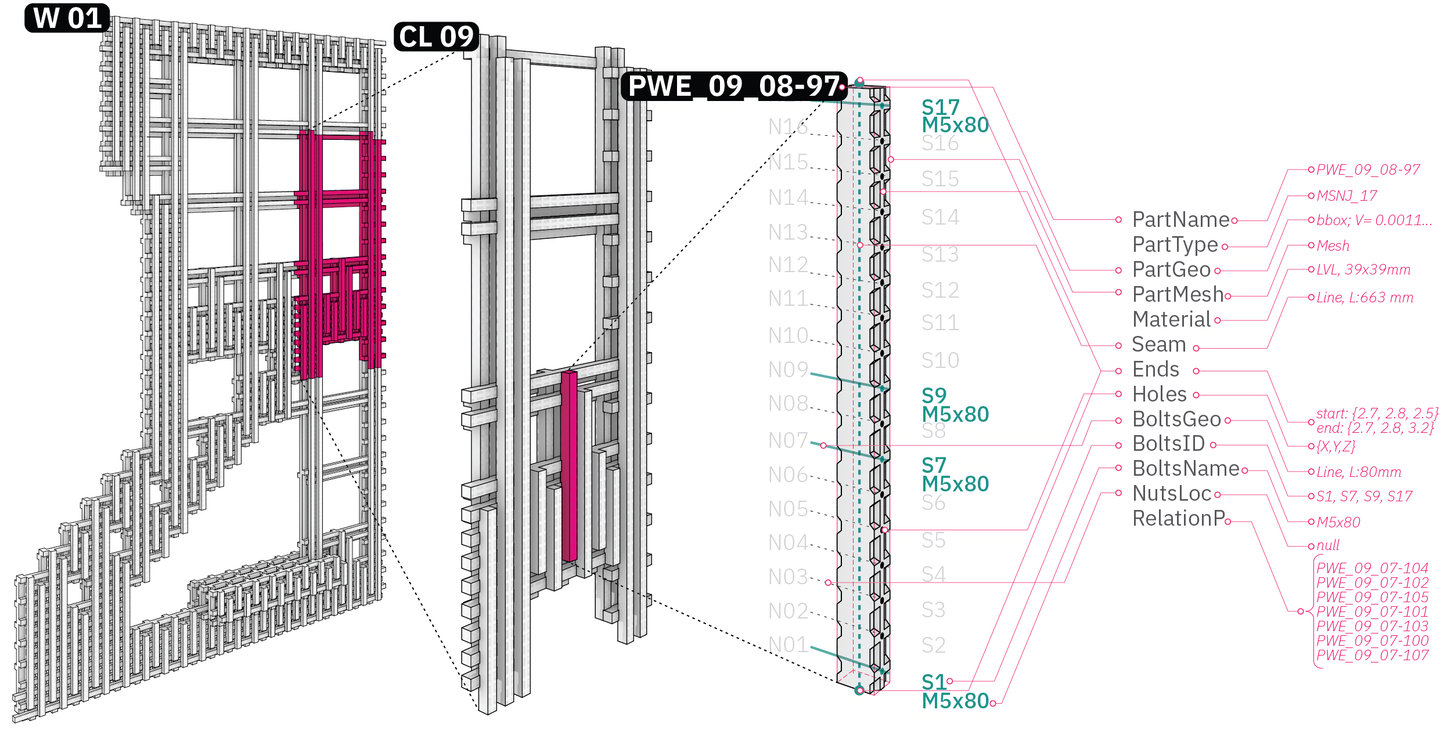
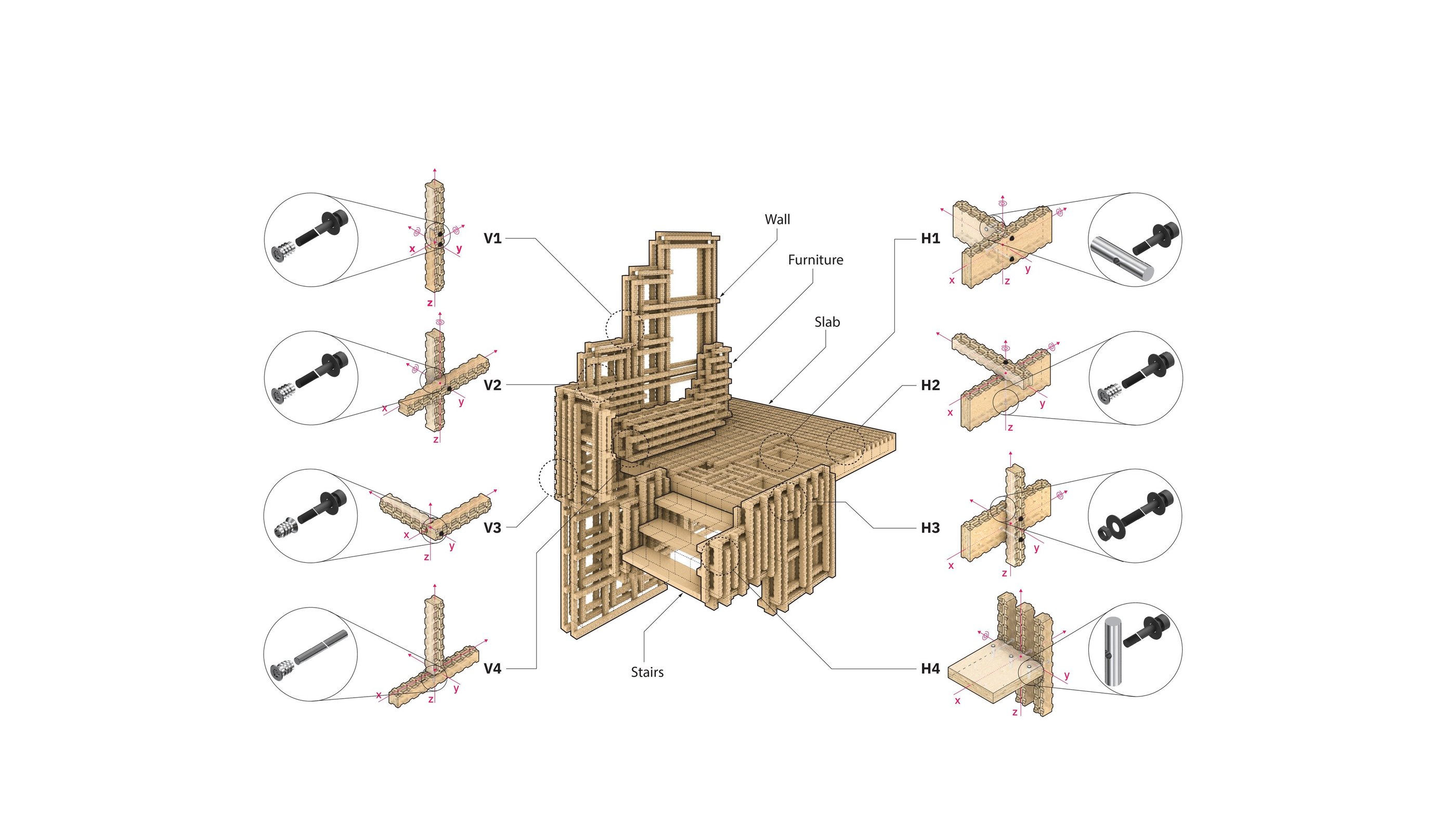
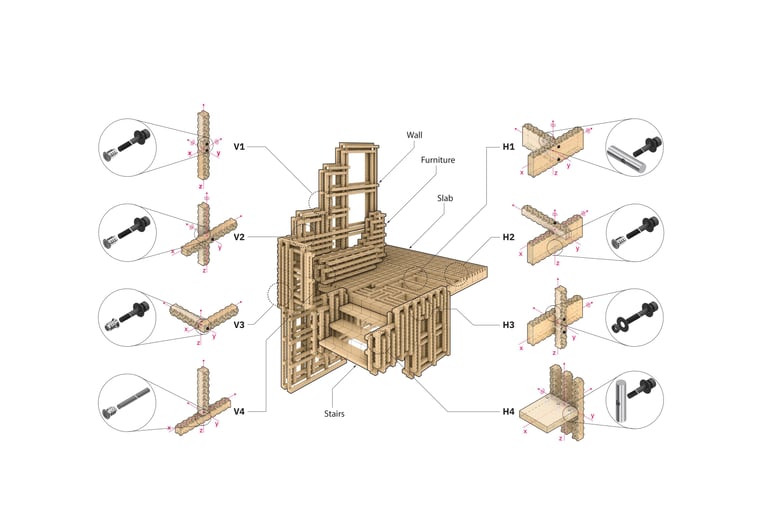
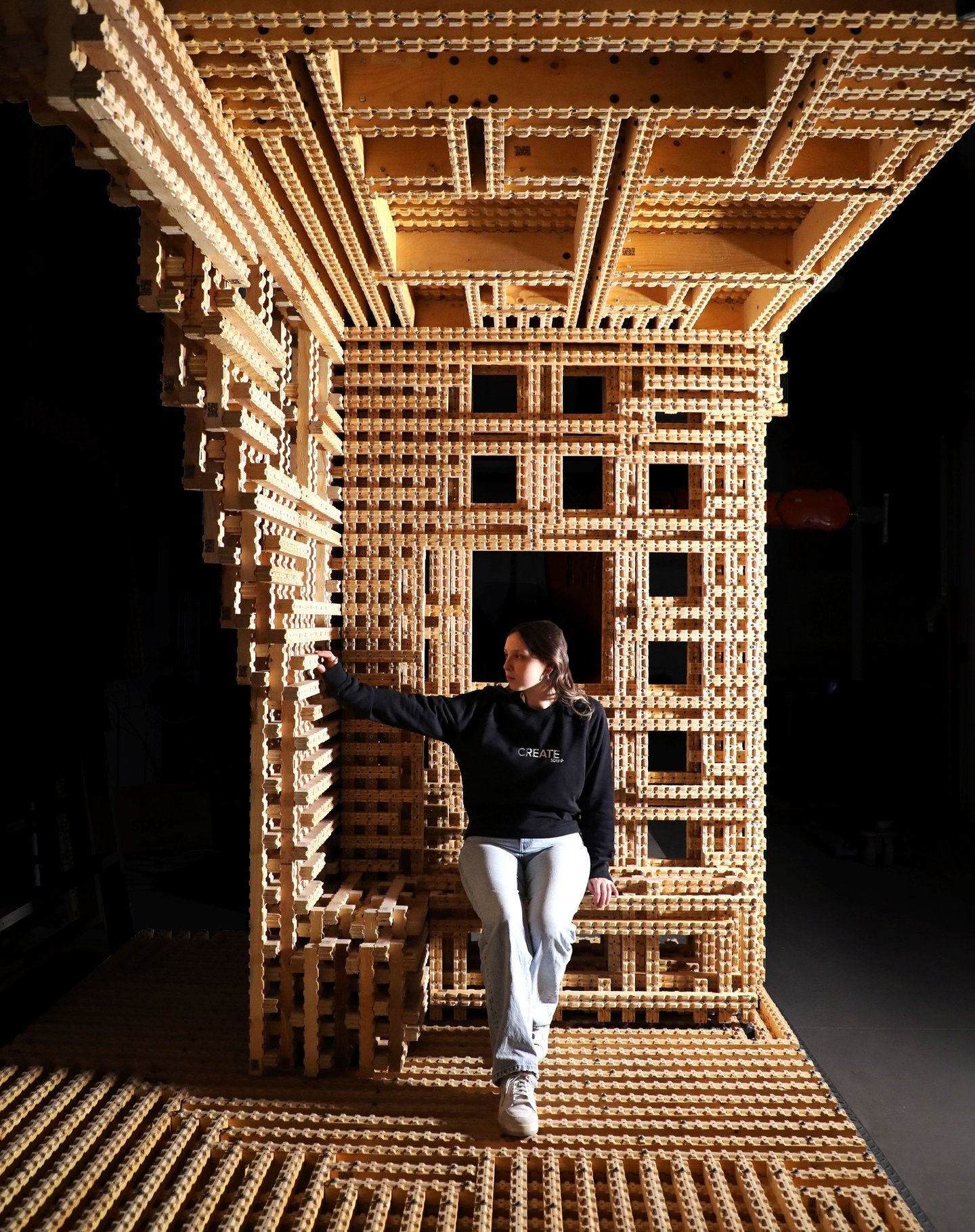
By integrating computational design, robotic fabrication, and data-driven material tracking, ReconWood proposes a shift from static construction towards dynamic, reconfigurable, and continuously evolving timber architectures.
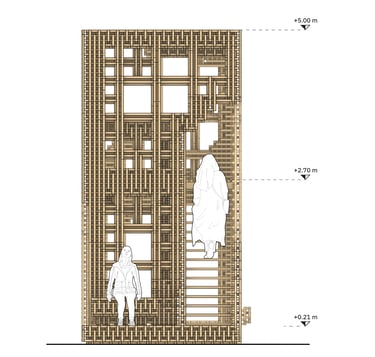


Barcelona, Spain
giuseppemarrone31@gmail.com